Pharmaceutical Headspace Analyzer: ISO 9187 Ampoule Guide
A single ampoule with 2.1% residual oxygen instead of the specified 0.5% maximum. That was the root cause behind a 2023 sterile injectable recall that affected 14 batches and cost the manufacturer an estimated $8.3 million in destroyed product, regulatory remediation, and lost contracts. The failure point was not the filling line or the nitrogen purge system -- it was the absence of routine headspace gas verification using a calibrated pharmaceutical headspace analyzer.
Headspace gas testing is one of the most cost-effective quality gates in pharmaceutical packaging. This guide walks through the complete ISO 9187 framework for ampoule headspace analysis, from gas parameter specifications to step-by-step testing procedures and GMP documentation requirements.
A pharmaceutical headspace analyzer is an analytical instrument that measures the gas composition -- primarily oxygen, carbon dioxide, nitrogen, and residual moisture -- sealed inside pharmaceutical containers such as ampoules, vials, and syringes. It is the primary quality instrument for verifying inert atmosphere integrity in sterile injectable products.
Why Headspace Gas Testing Matters in Pharmaceutical Ampoules
Pharmaceutical ampoules create a sealed microenvironment around the drug product. The composition of gas in that headspace directly determines product stability, regulatory compliance, and patient safety.
Product stability and degradation pathways. Oxygen is the primary adversary. Dissolved and headspace O2 drives oxidative degradation of active pharmaceutical ingredients (APIs), forming toxic impurities, reducing potency, and discoloring solutions. Moisture in the headspace accelerates hydrolysis -- particularly damaging for lyophilized products where even 1% residual moisture can collapse the cake structure within months. CO2 can shift pH in unbuffered solutions, altering dissolution profiles and bioavailability.
Regulatory mandates. Multiple frameworks require headspace gas control:
- ICH Q1B -- Photostability testing guidelines reference headspace composition as a variable that must be controlled during stability studies
- FDA 21 CFR Part 211.165 -- Requires testing of each batch of drug product for identity, strength, quality, and purity, which includes container integrity verification
- EU GMP Annex 1 (2023 revision) -- Section 8.22 explicitly addresses container closure integrity testing and headspace analysis for sterile products
- USP <1207> -- Package Integrity Evaluation framework that positions headspace analysis as a deterministic method
Patient safety consequences. An oxidized injectable can deliver sub-therapeutic doses, cause adverse injection site reactions, or introduce degradation products with unknown toxicity profiles. For oxygen-sensitive biologics, even short-term exposure above specification limits can denature proteins irreversibly. Headspace testing catches these failures before the product leaves the facility.
Key Gas Parameters in Pharmaceutical Packaging
A pharmaceutical headspace analyzer measures four primary parameters. Each has distinct specification ranges depending on the product type and route of administration.
Oxygen (O2) is the most frequently specified parameter. Most sterile injectables require headspace O2 below 0.5%, though highly sensitive biologics may specify limits as tight as 0.1%. Oxygen sensors in modern analyzers use electrochemical or laser-based detection, with resolution down to 0.01% for pharmaceutical-grade instruments.
Carbon dioxide (CO2) serves as an indicator of microbial contamination (metabolic CO2) and can also be introduced intentionally as part of modified atmosphere packaging. Typical pharmaceutical headspace CO2 ranges from 0.03% (ambient) to 0.5% maximum for most products.
Nitrogen (N2) is the standard inert blanket gas. After nitrogen purging, headspace N2 concentration should exceed 99% for oxygen-sensitive products. Measuring N2 directly confirms that the purge cycle achieved its target displacement.
Residual moisture is measured as dew point temperature or relative humidity within the headspace. For lyophilized products, headspace moisture correlates with residual cake moisture -- a critical quality attribute. Target dew points typically fall below -40 degC for freeze-dried formulations.
| Product Type | O2 Limit | CO2 Limit | N2 Fill Required | Moisture Spec |
|---|---|---|---|---|
| Liquid injectables (standard) | <= 0.5% | <= 0.5% | >= 99.0% | Not critical |
| Liquid injectables (O2-sensitive) | <= 0.1% | <= 0.3% | >= 99.5% | Not critical |
| Lyophilized powders | <= 0.5% | <= 0.5% | >= 99.0% | Dew point < -40 degC |
| Vaccines | <= 0.3% | <= 0.3% | >= 99.5% | Product-specific |
| Biologics / mAbs | <= 0.1% | <= 0.2% | >= 99.5% | Product-specific |
ISO 9187 Standard Explained
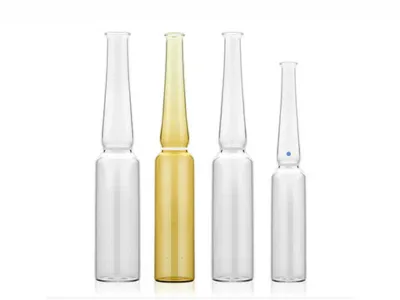
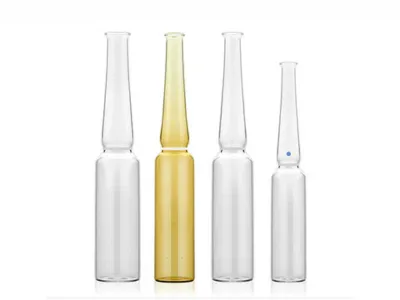
ISO 9187 is the international standard governing glass ampoules for injectable preparations. It establishes dimensional requirements, glass quality specifications, and -- critically for headspace testing -- the framework for verifying container integrity.
Scope. ISO 9187 applies to glass ampoules made from borosilicate or soda-lime-silica glass tubing, intended for parenteral preparations. The standard is divided into two parts:
- ISO 9187-1 covers ampoules with pre-cut break opening (OPC type). These ampoules have a scored or pre-stressed neck that snaps cleanly without tools.
- ISO 9187-2 covers ampoules that require a separate opening procedure (non-OPC type), including those sealed by tip-sealing or pull-sealing methods.
Key test requirements. The standard specifies dimensional tolerances (body diameter, neck diameter, overall length), glass hydrolytic resistance classes, and seal integrity tests. For headspace analysis, ISO 9187 requires that sealed ampoules maintain their internal atmosphere within specification throughout the stated shelf life.
Calibration and validation for compliance. Headspace analyzers used for ISO 9187 testing must be calibrated against certified reference gas mixtures traceable to national metrology standards (e.g., NIST). Validation protocols should include:
1. Linearity verification across the measurement range (0--25% O2 minimum)
2. Repeatability testing (RSD < 2% across 10 consecutive measurements)
3. Accuracy verification against at least three certified gas concentrations
4. Response time qualification (T90 < 15 seconds for real-time production monitoring)
The practical difference between Part 1 and Part 2 affects testing logistics: OPC ampoules allow faster sampling because the break opening provides a consistent access point, while non-OPC ampoules may require needle puncture through the sealed tip, introducing additional variables in the sampling technique.
Step-by-Step Testing Procedure
Sample Preparation and Storage
Temperature directly affects gas solubility and headspace pressure. Henry's Law dictates that dissolved gas concentrations shift with temperature -- a sample measured at 30 degC will show different headspace O2 than the same sample at 20 degC.
1. Allow ampoules to equilibrate at 23 +/- 2 degC for a minimum of 4 hours before testing
2. Store samples upright in a controlled environment (20--25 degC, 40--60% RH)
3. Do not expose samples to direct sunlight or temperature extremes during transport from the production floor
4. Record the ambient temperature and barometric pressure at the time of testing -- both affect gas concentration readings
Needle Puncture and Gas Sampling Technique
The puncture step is the single largest source of error in headspace gas testing. Poor technique introduces ambient air into the sample, producing artificially high O2 readings.
- Puncture location: Target the center of the ampoule shoulder (the curved section between the neck and body). For OPC ampoules, sample through the break point area or use the opened neck directly.
- Needle gauge: Use 22--24 gauge needles for standard ampoules. Smaller gauges (higher numbers) minimize the puncture diameter but increase back-pressure. Larger gauges risk excessive ambient air ingress.
- Gas dilution prevention: Use a septum-equipped sampling needle with positive displacement. Flush the needle dead volume with nitrogen before puncture. Maintain a slight positive pressure differential -- the analyzer should draw gas at a rate that prevents atmospheric back-diffusion through the puncture site.
- Single-use needles only: Reusing needles introduces cross-contamination risk and compromises the seal of the puncture.
Instrument Settings and Data Recording
Before each testing session, perform a zero-point calibration using certified zero gas (high-purity N2, >= 99.999%) and a span calibration using a certified reference mixture matching the expected sample range.
- Flow rate: Set the sampling flow between 50--150 mL/min depending on ampoule volume. Lower flow rates reduce the risk of drawing ambient air through the puncture.
- Sample volume: Ensure the analyzer requires no more than 2--3 mL of headspace gas per measurement. Ampoule headspace volumes range from 1 mL to 10 mL depending on fill volume and ampoule size -- drawing too much sample dilutes the reading.
- Data logging: All results must be recorded electronically with timestamps, operator ID, batch number, and instrument serial number. GMP-compliant systems generate tamper-evident records per 21 CFR Part 11.
Testing Different Pharmaceutical Products
Liquid injectables represent the highest-volume application for pharmaceutical headspace analyzers. Epinephrine, morphine sulfate, and atropine solutions are all highly oxygen-sensitive. Typical acceptance criteria: O2 <= 0.5%, with tighter limits (O2 <= 0.2%) for products with demonstrated oxidative degradation pathways. Testing frequency: every batch, with in-process checks during filling line startup and after any line stoppage exceeding 15 minutes.
Lyophilized (freeze-dried) powders shift the critical parameter from oxygen to moisture. Residual moisture in the headspace equilibrates with the cake, and excess moisture causes collapse, crystallization, or loss of reconstitution performance. Test headspace moisture alongside O2 -- even well-purged ampoules can show elevated moisture if the stoppering step allowed humid air ingress. Target: headspace dew point below -40 degC and O2 below 0.5%.
Vaccines demand strict gas composition control because many formulations use aluminum adjuvants or protein antigens that are oxygen-sensitive. Cold chain transport adds complexity -- samples must reach thermal equilibrium before testing, and temperature excursions during transit may have already altered the headspace composition. Always cross-reference headspace results with temperature monitoring data.
Biologics and monoclonal antibodies require the highest analytical precision. Protein aggregation driven by oxidative stress can occur at O2 levels as low as 0.15%, making 0.01% measurement resolution a necessity rather than a luxury. For these products, laser-based headspace analyzers offer the required sensitivity without consuming the sample, enabling 100% non-destructive inspection on high-value batches.
GMP Compliance and Documentation Requirements
Headspace gas testing generates regulated data. Every result must withstand scrutiny during FDA pre-approval inspections, EMA audits, and customer qualification audits.
21 CFR Part 11 electronic records. If results are stored electronically (and they should be), the system must provide:
- Unique user authentication with role-based access
- Computer-generated audit trails recording all data creation, modification, and deletion events
- Electronic signature capability equivalent to handwritten signatures
- Backup and recovery procedures documented in an SOP
Audit trail specifics. Auditors look for gaps. Every calibration event, every test result, every out-of-specification (OOS) investigation must be traceable. The audit trail should capture who performed each action, when, and why any changes were made to original data.
Calibration frequency. At minimum, perform a full calibration at the start of each shift and a verification check every 4 hours during continuous operation. Document calibration gas lot numbers, expiration dates, and certificate of analysis references.
What inspectors check:
1. Calibration records match the instrument logbook and the gas certificate COAs
2. OOS results are investigated per a written SOP -- not simply retested until passing
3. Operator training records are current and specific to the instrument model
4. Data integrity: no orphan files, no uncontrolled spreadsheets, no manual transcription of electronic results
Troubleshooting Common Testing Issues
High O2 readings despite correct nitrogen fill -- five causes and solutions:
1. Leaking ampoule seal: Inspect seal integrity using a dye ingress or vacuum decay test before headspace analysis
2. Needle puncture admitting ambient air: Switch to a smaller gauge needle and reduce analyzer flow rate
3. Insufficient nitrogen purge time: Increase purge duration by 25% and verify with inline O2 monitoring before sealing
4. Residual O2 in nitrogen supply: Check the gas supply certificate -- industrial-grade N2 (99.9%) contains 1000 ppm O2, while pharmaceutical-grade (99.999%) contains < 10 ppm
5. Temperature-induced off-gassing: Dissolved O2 in the liquid product outgasses as temperature rises. Ensure testing occurs at the same temperature as the filling operation
Inconsistent results between instruments. Calibration drift is the most common cause. Run both instruments against the same certified reference gas. If one deviates by more than 0.05% absolute, recalibrate against fresh reference standards. Also verify that needle condition, flow rate settings, and sampling technique are identical between operators.
Needle clogging. Glass particles from the ampoule puncture can block the needle bore. Use a rotating puncture motion rather than direct push-through. Replace needles after every 10--15 punctures, or immediately if flow rate drops below the validated range.
Ambient air contamination. Test in a low-turbulence environment. HVAC drafts across the sampling area create pressure differentials that draw ambient air into the puncture site. Position the analyzer away from air supply diffusers and door openings.
Cost and Time Analysis
Headspace gas testing is fast and inexpensive relative to the quality assurance value it provides.
Testing throughput:
| Method | Samples/Hour | Operator Skill Required | Destructive? |
|---|---|---|---|
| Manual needle puncture + analyzer | 20--30 | Moderate (trained technician) | Yes |
| Semi-automated carousel system | 60--90 | Low (load and start) | Yes |
| Laser-based non-destructive | 120--200 | Low (conveyor integration) | No |
Cost per test. Manual puncture testing costs approximately $1.50--3.00 per sample (needle, septum, calibration gas amortization, labor). Automated systems reduce this to $0.40--0.80 per sample at volumes above 500 tests per day. Non-destructive laser systems have higher capital costs but zero consumables per test.
ROI calculation. A single batch recall for a sterile injectable product costs between $2 million and $15 million when accounting for destruction, investigation, regulatory response, and lost market confidence. A pharmaceutical headspace analyzer with full GMP documentation capability represents a capital investment of $15,000--$45,000 -- the cost of testing an entire year's production is a fraction of one recall event.
**Ready to eliminate headspace-related quality risks?** KHT Instrument manufactures pharmaceutical-grade headspace gas analyzers with 0.01% O2 resolution, built-in 21 CFR Part 11 compliant data logging, and ISO 9187-validated sampling accessories. Our instruments are deployed in pharmaceutical QC labs across 30+ countries. Request a quote for a system configured to your product specifications.
Frequently Asked Questions About Pharmaceutical Headspace Analyzers
What is a pharmaceutical headspace analyzer?
A pharmaceutical headspace analyzer is an analytical instrument that measures the gas composition
inside sealed pharmaceutical containers -- primarily oxygen, carbon dioxide, nitrogen, and
residual moisture. It is used in pharmaceutical QC labs to verify that ampoules, vials, and
syringes contain the correct inert atmosphere required for product stability, regulatory
compliance, and patient safety. Modern instruments deliver O2 measurement resolution down
to 0.01%, which is necessary for oxygen-sensitive biologics and injectable products.
What O2 level is acceptable in pharmaceutical ampoules per ISO 9187?
Per ISO 9187 and established pharmaceutical industry practice, headspace oxygen must not
exceed 0.5% for standard sterile liquid injectables. Highly oxygen-sensitive products,
including biologics and monoclonal antibodies, require tighter limits of 0.1% or below.
For lyophilized powders, the O2 limit is typically 0.5%, with the additional requirement
of a headspace dew point below -40 degrees C for moisture control.
How often should a pharmaceutical headspace analyzer be calibrated?
GMP best practice requires a full two-point calibration (zero gas + span gas) at the
start of each shift, and a span verification check every 4 hours during continuous
operation. Calibration gas lot numbers, expiration dates, and certificate of analysis
references must be documented in the instrument logbook. Any calibration deviation
exceeding the validated acceptance limit requires the instrument to be taken out of
service until recalibration is complete and verified.
What is the difference between headspace analysis and container closure integrity testing?
Headspace gas analysis measures the chemical composition of the atmosphere inside a sealed
container -- specifically gas concentrations and moisture levels. Container closure integrity
testing (CCIT) verifies the physical integrity of the seal itself, confirming that no
pathway exists for gas or microbial ingress. The two methods are complementary: USP <1207>
recommends using both, as a container can pass CCIT while still containing an incorrect
gas atmosphere due to errors in the filling or purging process.
Can pharmaceutical headspace analyzers meet 21 CFR Part 11 requirements?
Yes -- pharmaceutical-grade headspace analyzers designed for GMP environments include
built-in 21 CFR Part 11 compliant software that provides role-based user authentication,
computer-generated and tamper-evident audit trails, electronic signature capability, and
automated data backup. When evaluating instruments, confirm that the data logging system
generates records that cannot be edited without a logged audit entry, and that the
software has been validated by the manufacturer for 21 CFR Part 11 compliance.
Conclusion
Headspace gas testing is not optional for pharmaceutical ampoule manufacturers -- it is a regulatory expectation and a direct safeguard against product degradation, potency loss, and patient harm. ISO 9187 provides the framework, but execution depends on proper instrument selection, validated sampling techniques, and rigorous GMP documentation practices.
The most common failures in headspace testing programs are not analytical -- they are procedural: poor needle technique, infrequent calibration, and inadequate data integrity controls. Address these three areas, and your headspace testing program becomes a reliable, audit-ready quality gate.
Start with a gap assessment of your current testing procedure against the requirements outlined above. If your current analyzer cannot deliver 0.01% O2 resolution or GMP-compliant electronic records, it is time to evaluate an upgrade. Contact KHT Instrument to schedule a technical consultation with our pharmaceutical applications team.